
Medicinal mushrooms have been valued for centuries as powerful natural allies for human health, yet only in recent decades has modern science begun to fully explore their remarkable potential. Across traditional wellness systems in Asia and other parts of the world, mushrooms were not simply regarded as food but as functional organisms capable of supporting the body’s resilience, vitality, and long-term balance. Today, increasing scientific interest in functional fungi is confirming many of these historical observations, revealing that certain mushroom species contain unique bioactive compounds that can support immunity, cognitive performance, energy production, and overall well-being. As modern lifestyles place increasing demands on both the mind and body, medicinal mushrooms are emerging as one of nature’s most sophisticated tools for maintaining health in a fast-paced world.
At the heart of medicinal mushrooms is their extraordinary biochemical composition. Unlike most plants, fungi produce a wide range of complex polysaccharides, triterpenes, antioxidants, and immune-modulating compounds that interact with the human body in subtle yet profound ways. Among the most studied of these compounds are beta-glucans, natural molecules known to support immune system communication and responsiveness. Rather than overstimulating the body, these compounds work adaptively, helping the body maintain equilibrium by enhancing its natural defense mechanisms when needed while also supporting recovery and repair. This balanced interaction with the body is one reason medicinal mushrooms are often described as adaptogenic—supporting the body’s ability to adapt to stress and maintain internal stability.

-
FOCUS STACK
Original price was: ₨ 7,500.00.₨ 6,500.00Current price is: ₨ 6,500.00. -
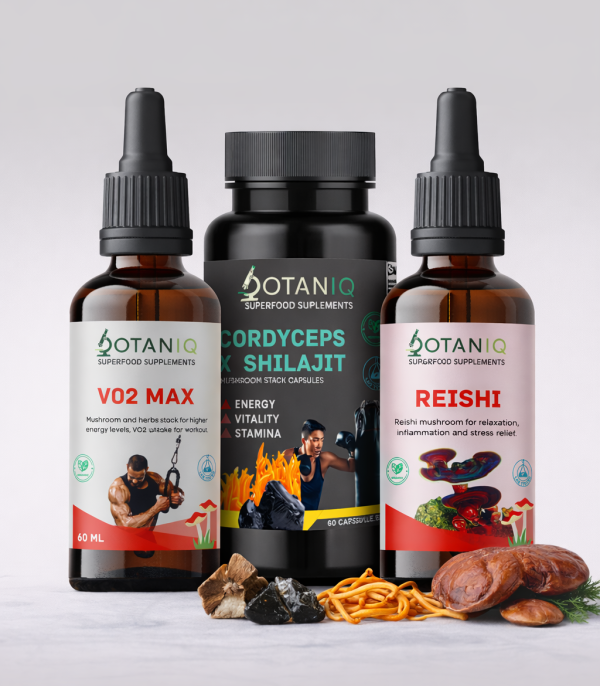
WORKOUT
Original price was: ₨ 7,500.00.₨ 6,500.00Current price is: ₨ 6,500.00.
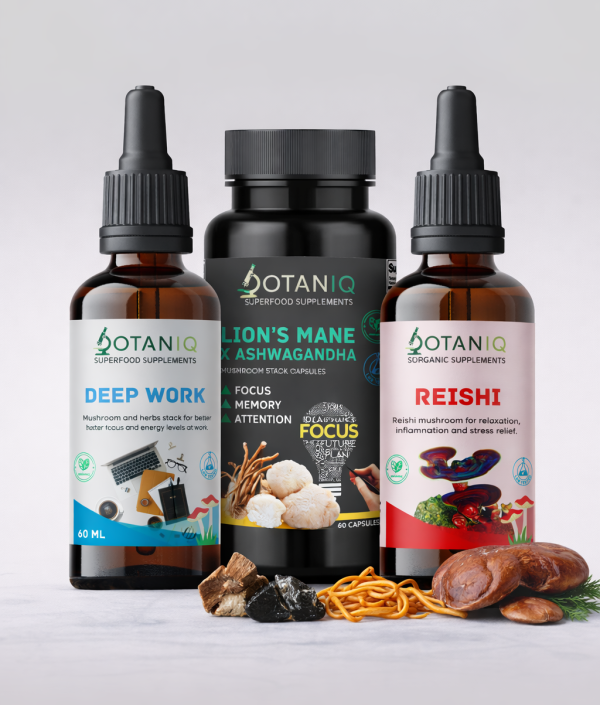
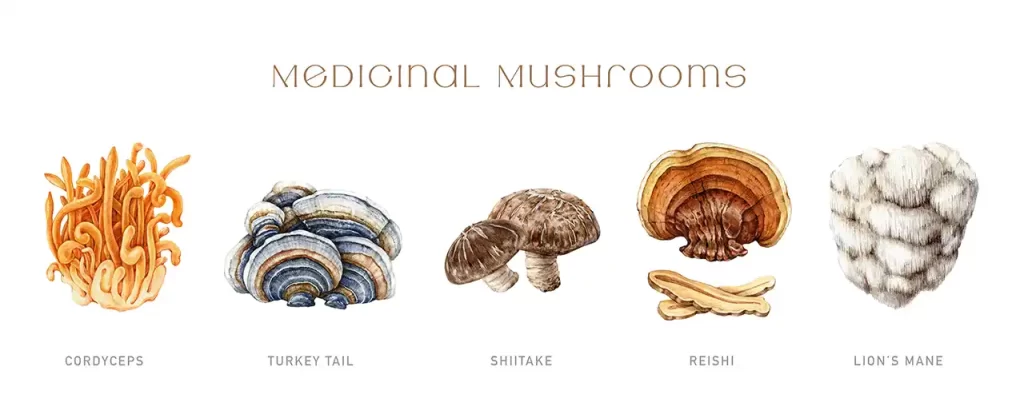
One of the most widely recognized medicinal mushrooms is Lion’s Mane, valued for its potential role in cognitive health and neurological support. This distinctive mushroom contains compounds known as hericenones and erinacines, which have been studied for their ability to stimulate the production of nerve growth factor (NGF), a protein involved in the growth, repair, and protection of neurons. Because of this property, Lion’s Mane has attracted attention for its potential to support mental clarity, memory, and sustained focus—qualities that are increasingly valuable in modern professional and academic environments where cognitive performance is constantly challenged.
Another remarkable medicinal mushroom is Cordyceps, traditionally used to promote stamina and physical endurance. Historically prized in high-altitude regions of Asia, Cordyceps has been associated with improved oxygen utilization and cellular energy production. Scientific investigations suggest that compounds within Cordyceps may support the body’s production of ATP, the primary energy molecule used by cells. For individuals balancing demanding work schedules, athletic training, or active lifestyles, Cordyceps offers a natural way to support sustained energy without the sharp spikes and crashes associated with stimulants.
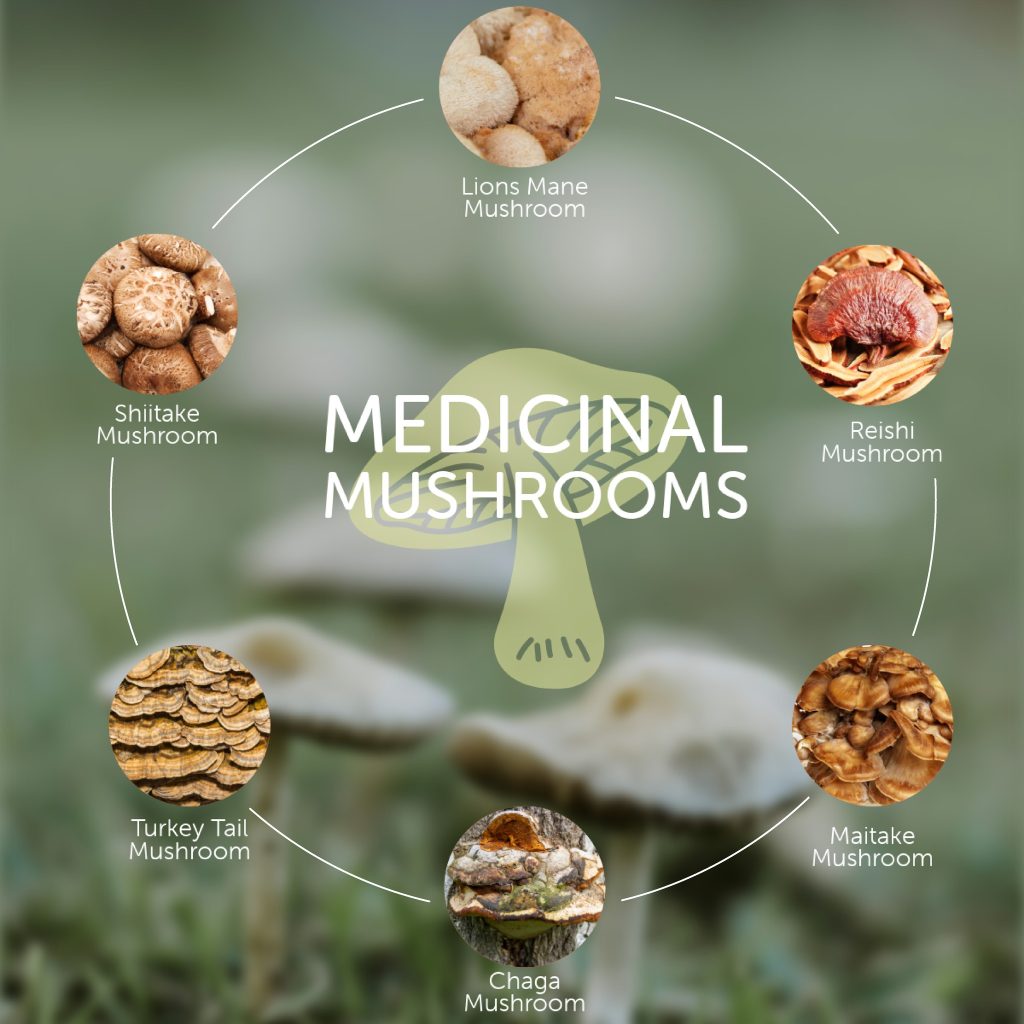
When discussing immune resilience and long-term wellness, few mushrooms are as revered as Reishi. Often referred to as the “mushroom of longevity” in traditional wellness practices, Reishi contains triterpenes and polysaccharides that have been widely studied for their calming and immune-supportive properties. Rather than acting as a stimulant, Reishi is often associated with promoting balance within the nervous system, helping the body transition from a state of chronic stress to one of recovery and restoration. For this reason, it is frequently used as part of daily wellness routines aimed at improving sleep quality, emotional balance, and long-term resilience.
Another key contributor to immune health is Turkey Tail, a mushroom recognized for its dense concentration of polysaccharides and immune-supportive compounds. Among these are PSK and PSP, bioactive molecules that have been studied extensively for their role in supporting immune cell function. Turkey Tail is often used to reinforce the body’s natural defenses, helping maintain a robust and responsive immune system capable of adapting to environmental challenges.
Finally, the widely consumed culinary mushroom Shiitake also holds important medicinal qualities beyond its rich flavor. Shiitake contains compounds such as lentinan, a beta-glucan that has been studied for its ability to support immune function and cardiovascular health. Its combination of nutritional value and functional benefits illustrates an important principle within the world of medicinal fungi: the line between food and medicine is often beautifully blurred.
What makes medicinal mushrooms particularly unique is their holistic interaction with the body. Unlike many synthetic compounds that target a single biochemical pathway, functional mushrooms work across multiple systems simultaneously. They may support immune communication, reduce oxidative stress, assist neurological function, and contribute to metabolic balance—all through naturally occurring compounds that evolved within these remarkable organisms. This systems-level influence aligns with modern approaches to wellness that emphasize prevention, resilience, and long-term health rather than short-term symptom management.
As interest in natural wellness continues to grow, medicinal mushrooms are gaining recognition not merely as supplements but as foundational tools for supporting everyday health. Their long history of traditional use, combined with an expanding body of scientific research, positions them as one of the most promising categories in the field of functional nutrition. When cultivated responsibly and processed with care, these mushrooms offer a way to reconnect modern lifestyles with nature’s deeply sophisticated biological systems.
In essence, medicinal mushrooms represent a meeting point between ancient wisdom and modern science. They remind us that some of the most powerful solutions for human well-being have always existed within the natural world, quietly growing beneath forest canopies and within rich ecosystems. By incorporating these extraordinary fungi into daily wellness practices, individuals can access a form of nourishment that supports not only immediate vitality but also the long-term harmony of mind, body, and environment.