
NATURE’S ENERGY BOOSTER
Athletes are constantly searching for safe and effective ways to improve endurance, boost energy, and recover faster. While many turn to caffeine, pre-workouts, and sports supplements, a growing number of athletes are exploring functional mushrooms—particularly Cordyceps—as part of their performance routine.

Used for centuries in traditional Asian medicine and now backed by increasing scientific interest, Cordyceps has gained attention for its potential to support energy production, exercise performance, and recovery. But can this mushroom actually help athletes perform better?
What is Cordyceps?
Cordyceps is a genus of fungi traditionally found in high-altitude regions of the Himalayas and Tibetan Plateau. Historically, wild Cordyceps was highly prized and often reserved for royalty and elite members of society.
Today, most Cordyceps supplements are cultivated in controlled laboratory environments using nutrient-rich substrates such as whole-grain rice. This cultivation method allows for sustainable production while preserving many of the beneficial compounds found in the mushroom.
The species most commonly used in supplements is Cordyceps militaris, which contains naturally occurring bioactive compounds, including cordycepin, polysaccharides, and antioxidants.
Why Athletes Are Interested in Cordyceps

Physical performance depends on the body’s ability to efficiently produce and utilize energy. During exercise, muscles require oxygen and nutrients to sustain activity. Fatigue often occurs when energy production cannot keep up with demand.
Cordyceps has attracted attention because it may help support the body’s natural energy systems. Unlike stimulants that provide a temporary boost followed by a crash, Cordyceps works differently by supporting cellular energy production.
This makes it particularly appealing to endurance athletes, runners, cyclists, gym-goers, and anyone looking to maintain consistent physical performance.
Cordyceps and Exercise Performance

One of the most researched areas of Cordyceps is its effect on exercise capacity.
Several studies suggest that Cordyceps may help improve the body’s utilization of oxygen during physical activity. Efficient oxygen use is important because it can support endurance and delay the onset of fatigue during prolonged exercise.
Researchers believe this may be linked to Cordyceps’ ability to support the production of ATP (adenosine triphosphate), the primary source of energy used by cells.
For athletes, improved ATP production may contribute to:
- Enhanced endurance
- Increased stamina
- Better exercise capacity
- Sustained energy levels during training
- Reduced feelings of fatigue
While Cordyceps is not a substitute for proper training and nutrition, it may serve as a valuable addition to a well-rounded performance strategy.
Can Cordyceps Help with Recovery?
Recovery is just as important as training. Every workout creates stress on muscles and generates oxidative stress within the body.
Cordyceps contains antioxidant compounds that help neutralize free radicals. Antioxidants play an important role in protecting cells from oxidative damage that can occur after intense physical activity.
By supporting the body’s natural recovery processes, Cordyceps may help athletes maintain consistency in their training programs.
Many users report feeling less physically drained after demanding workouts, although individual experiences may vary.
Energy Without the Crash
One reason athletes appreciate Cordyceps is that it does not function like a traditional stimulant.
Unlike high doses of caffeine, Cordyceps does not typically cause jitters, nervousness, or sudden energy crashes. Instead, many people describe its effects as steady and sustainable.
This makes it suitable for:
- Morning training sessions
- Endurance sports
- Busy workdays combined with exercise
- Individuals sensitive to caffeine
Who Can Benefit from Cordyceps?
Cordyceps may be beneficial for:
- Runners and cyclists seeking greater endurance
- Gym enthusiasts looking to support workout performance
- Competitive athletes focused on recovery and stamina
- Students balancing academics and physical activity
- Working professionals with active lifestyles
- Older adults looking to maintain energy and vitality
How to Take Cordyceps?
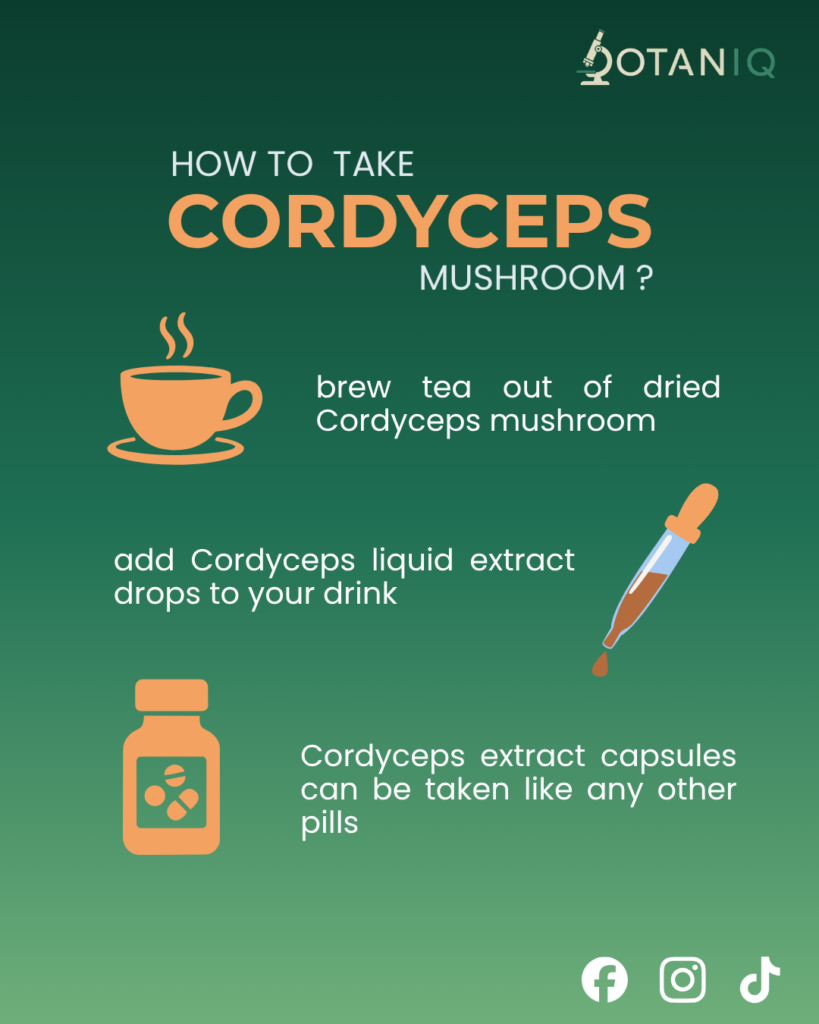
Cordyceps is commonly available in capsule, powder, and liquid extract forms.
Many athletes prefer taking Cordyceps in the morning or approximately 30–60 minutes before exercise. It can be consumed with water, added to smoothies, or incorporated into daily wellness routines.
Consistency is important, as functional mushrooms generally provide the greatest benefits when used regularly over time. Starting out is easy, you can easily incorporate Cordyceps into your diet, and start getting instant benefits.
At BOTANIQ, we grow our own Cordyceps militaris in optimum conditions and make sure every drop of extract is pure and potent. We make capsules and tea blends as well, for people who want to enjoy the taste of the medicine while feeling their energy go up, as they sit back and sip through this amazing herbal energy booster.
The Bottom Line
Cordyceps has earned its reputation as one of the most popular functional mushrooms among athletes and active individuals. While it is not a magic performance enhancer, research suggests it may support energy production, endurance, exercise capacity, and recovery through its unique bioactive compounds.
For athletes seeking a natural way to support performance without relying solely on stimulants, Cordyceps offers an intriguing option rooted in traditional use and increasingly supported by modern science.
Whether you’re training for a marathon, pushing through intense gym sessions, or simply looking to stay energized throughout the day, Cordyceps may be a valuable addition to your wellness routine.
Looking for a premium Cordyceps supplement? Explore BOTANIQ Cordyceps Extract, formulated to help support natural energy, endurance, and everyday performance.